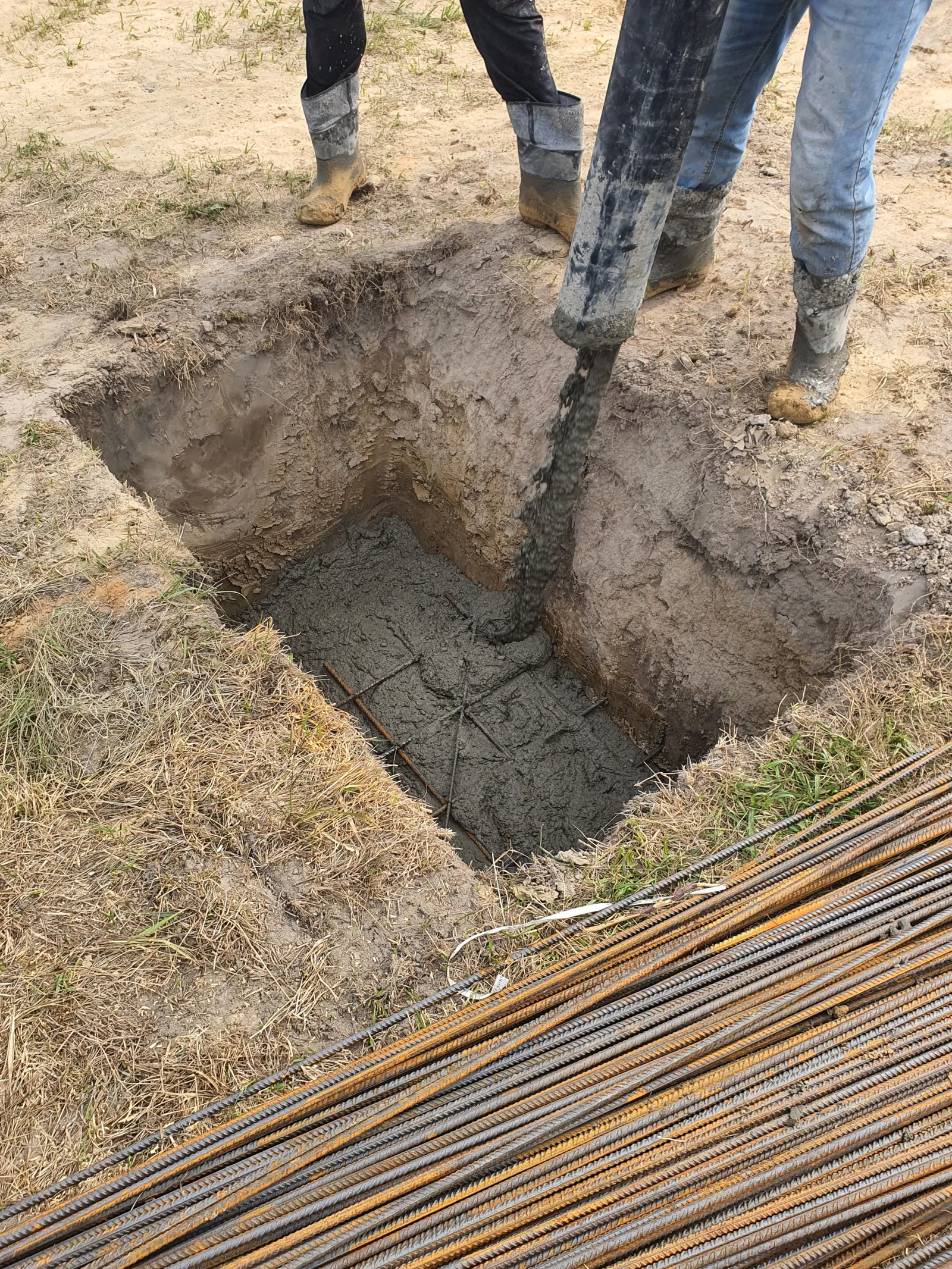
Mini piling is the workhorse of domestic foundations. Small-diameter piles, installed by compact rigs, carry your extension or new build safely past soft ground — without the mess or cost of deep dig-outs.
What is mini piling?
Mini piles (sometimes called micro piles) are slim piles between 150mm and 300mm in diameter, taken down to firm ground — usually somewhere between 5 and 12 metres below the surface. Once installed, the piles are tied together with a reinforced concrete ring beam or ground beam, and your walls are built off that.
Because the rigs are small, mini piling suits the places most building work actually happens: back gardens, side returns, terraced streets and infill plots. Our smallest machines fit through a 750mm gate.
When do you need mini piling?
- Trial holes show soft clay, peat, made ground or waterlogged soil.
- Building control has rejected traditional strip footings.
- Trees near the build mean roots and shrinkable clay — very common on Manchester and Cheshire clays.
- Old drains, wells or backfilled ground sit under the footprint.
- A traditional dig would need to go deeper than about 2.5 metres, where piling becomes cheaper and safer than mass concrete.
Types of mini pile we install
A continuous flight auger bores the pile, which is filled with concrete and reinforced. Low vibration — the default near existing structures.
A steel tube driven from within by a drop hammer, then concreted. No spoil to remove and excellent in wet or collapsing ground.
Auger sections added as the pile deepens — the answer for low headroom and internal work.
Self-drilling hollow bars grouted as they advance, for the most difficult ground and underpinning schemes.
What does mini piling cost?
Every honest answer starts with "it depends on the ground", but for budgeting: most North West extension projects land between £4,000 and £12,000 for piles and ground beams together. The main variables are pile count, pile depth and access. A typical single-storey extension needs 8 to 12 piles; a larger two-storey extension may need 14 to 20.
We quote fixed prices after a site visit, so the number on the quote is the number on the invoice.
Our process
- Review. We look at your drawings, trial holes and any engineer's or building control comments.
- Site visit. Access, headroom, services and ground are checked and the pile type confirmed.
- Design. Pile layout and beam design are produced or checked by a structural engineer.
- Installation. Most domestic jobs are piled in one to three days.
- Certification. You receive pile records for building control and your warranty provider.
Where we work
Our teams cover the whole North West, with local crews in:
Frequently asked questions
How much does mini piling cost?
Most domestic mini piling projects in the North West come in between £4,000 and £12,000 depending on pile depth, pile count and ground conditions. A typical single-storey extension needs 8 to 12 piles. We confirm a fixed price after a site visit.
How deep do mini piles go?
Most mini piles reach between 5 and 12 metres. The depth depends on where firm ground sits on your plot. A site investigation or trial pile tells us exactly what is needed before work starts.
Can a mini piling rig get into my back garden?
Usually, yes. Our compact rigs pass through openings as narrow as 750mm, so a standard side gate or garage is often enough. Where access is tighter still, see our restricted access piling service.
Do I need mini piling for my extension?
You may do if trial holes find soft clay, made ground or roots, or if your building inspector has asked for engineered foundations. Nearby trees and poor drainage are common triggers. We can advise from your plans and a site visit.
Is mini piling noisy?
Augered mini piles are one of the quieter foundation methods, with far less vibration than driven piling. That makes them well suited to built-up streets and work close to neighbouring properties.